The Calabash Nebula -- which has the technical name OH 231.8+04.2 -- is a spectacular example of the death of a low-mass star like the sun.

via Science Daily
Zazzle Space Exploration market place


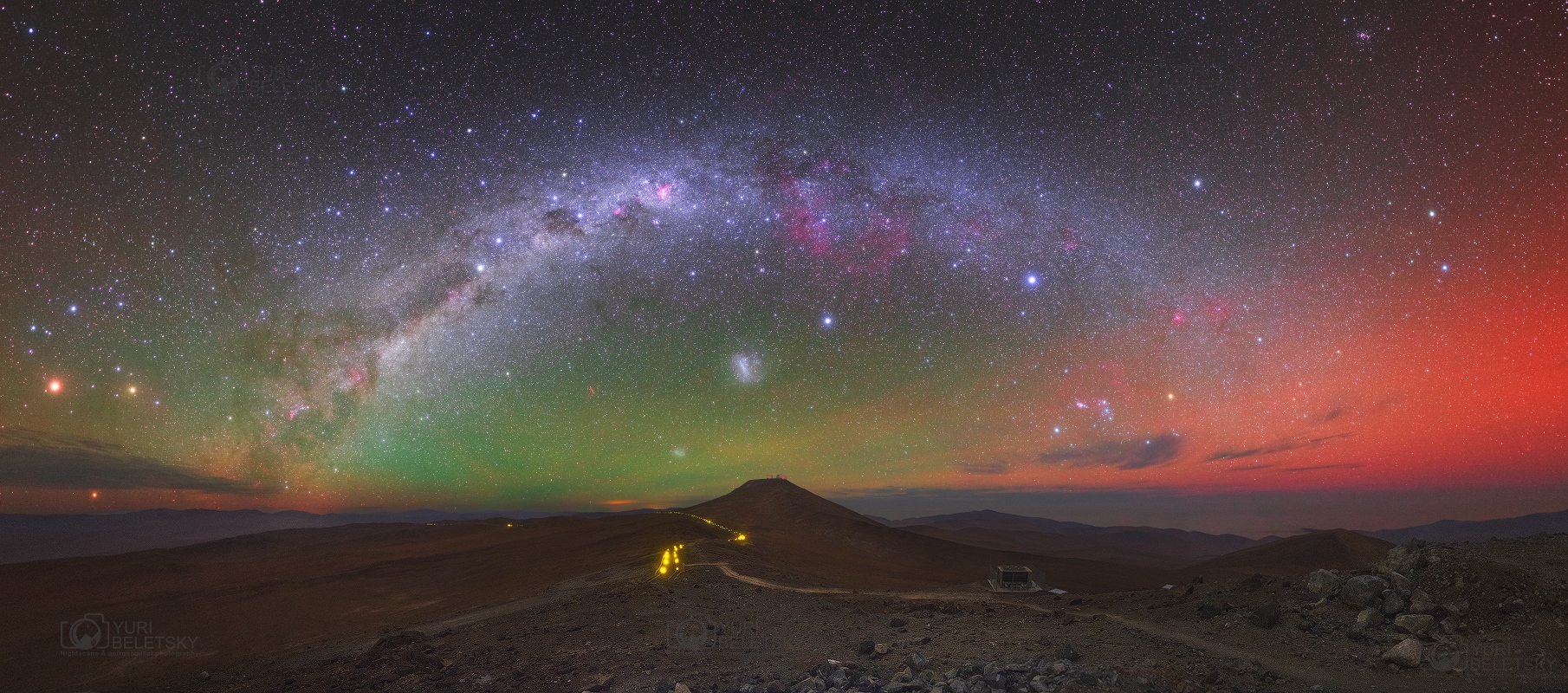 Captured last April after sunset on a Chilean winter's night an exceptionally intense airglow flooded this scene. The panoramic skyscape is also filled with stars, clusters, and nebulae along the southern Milky Way including the Large and Small Magellanic clouds. Originating at an altitude similar to aurorae, the luminous airglow is due to chemiluminescence, the production of light through chemical excitation. Commonly recorded with a greenish tinge by sensitive digital cameras, both red and green airglow emission here is predominately from atmospheric oxygen atoms at extremely low densities and has often been present in southern hemisphere nights during the last few years. Like the Milky Way on that dark night the strong airglow was visible to the eye, but seen without color. Mars, Saturn, and bright star Antares in Scorpius form the celestial triangle anchoring the scene on the left. The road leads toward the 2,600 meter high mountain Cerro Paranal and the European Southern Observatory's Very Large Telescopes.